

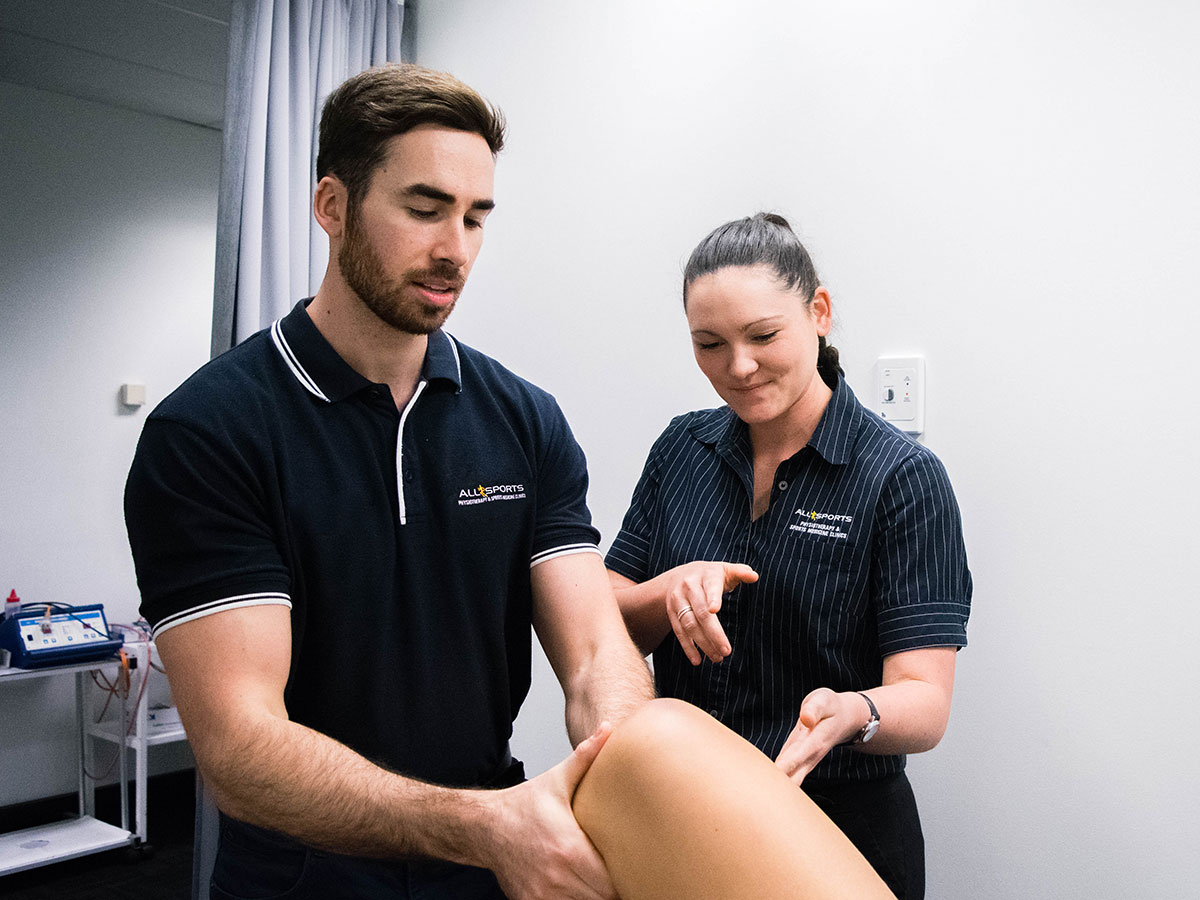

What exactly does a physiotherapist do?
The Allsports Physiotherapy Group is one of the leading providers of allied healthcare in Australia.
We use a multidisciplinary approach to design individualised treatment and rehabilitation programs for a wide range of injuries for patients from all walks of life.
Our growing number of purpose-built physiotherapy and sports medicine clinics provide expert physiotherapy treatment and easy access to a comprehensive range of allied health services aimed at caring for the whole person.


Latest Blogs

What exactly does a physiotherapist do?
Physiotherapy is a healthcare profession that addresses a wide range of sports, musculoskeletal, neurological, and cardiorespiratory conditions. Physiotherapists are experts in human movement and function, utilising their knowledge of anatomy, physiology, and biomechanics to assess, diagnose, and treat individuals of all ages and abilities.
When you make an appointment with a physiotherapist, they will usually start by asking you about your main concern and your medical history related to it. This helps them to understand why you're seeking treatment, your medical background, and any previous treatments you may have had.

Seeking Stability: Understanding how our body maintains balance
Balance, the delicate dance between stability and motion, is a marvel of the human body.
Our ability to remain upright relies on a symphony of intricate interactions between various systems in our body. If just one of these systems fails to play their part, we may literally end up right on our head. In this exploration, let’s unravel how these systems contribute to balance and shed light on the conditions that can disrupt this delicate harmony.

How Exercise and Physiotherapy Impact Bone Structure
In Australia, 4.74 million people over the age of 50 have been classified as having osteoporosis, osteopenia or poor bone health (Osteoporosis Australia, 2023). Osteoporosis is characterised by low bone mass and the disruption of bone microarchitecture which compromised bone strength and can lead to an increase in the risk of fractures (Australian Institute of Health and Welfare, 2023). The World Health Organisation (WHO) defines osteoporosis when bone mineral density is below -2.5 SD. Osteopenia is defined as a T-score between –1 and –2.5 SD (Osteoporosis Australia, 2023).
Our Community Partners


